Remote Team Culture Is Not About Pizza Parties on Zoom: What Actually Works
A common pattern starts with a disconnection concern, followed by a virtual happy hour. It may be enjoyable for some people, awkward for others, and difficult to sustain when attendance depends on the same small group.
The instinct is right. But the approach is wrong. Remote culture doesn’t come from events. It comes from the conditions you build between events.
Narrowness, Not Loneliness
Remote workers are not necessarily short on social contact. They may be on calls all day. The problem is often narrowness: they interact with the same few people about the same work topics, week after week.
You can test that in your own team. Ask five people to name one colleague outside their immediate group whom they would contact for advice. Note the names, the reasons, and any teams nobody can reach.
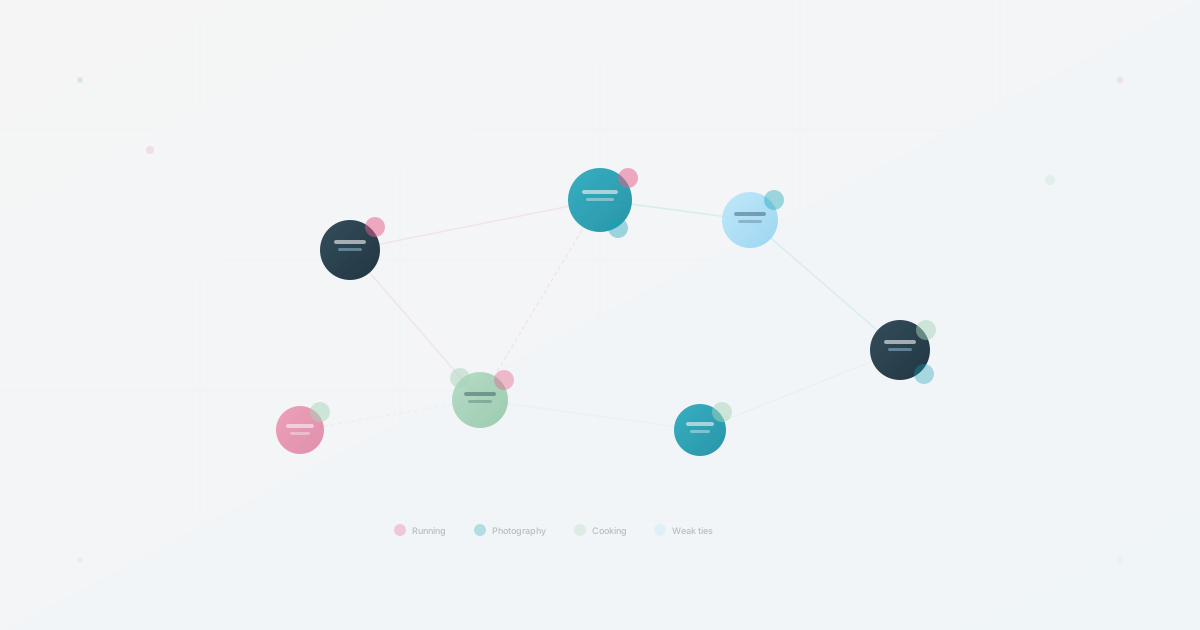
In an office, a colleague’s plant cutting or film photographs may reveal a small piece of context without a formal activity. These unplanned revelations can create weak ties, and they may help people recognize a reason to talk.
Remote work can remove some of those ambient signals, leaving people with a name, a title, and a rectangle on a screen.
Why Events Can’t Fix a Structural Problem
Mandatory social events can have a selection problem: the people most comfortable attending are not necessarily the people who most need a new connection. New hires, people in different time zones, and people who prefer lower-pressure contact may opt out.
Scheduling “fun” treats connection as something to be managed. But connection isn’t a program. It’s a byproduct of people knowing enough about each other to find common ground on their own.
Infrastructure Over Events
A practical pattern to test is to complement events with infrastructure that lets people choose how connection happens between them.
Make people visible beyond their job title
In a remote team, employees may know little about one another outside of work context. That narrowness can make cross-team work feel more isolating.
The fix can be low-tech: give people a place to share a few personal interests, hobbies, or passions in their profile, right where colleagues already go to look them up. A freeform prompt is often easier to understand than a list of categories.
One possible next step is that someone browsing the directory for a project contact notices a shared interest and starts a conversation. Measure whether this happens and whether it helps with work or belonging rather than assuming the field will create trust.
Participation should always be optional. Track whether people use the information to start a conversation, rather than tracking field completion alone.
The team-hobbies framework covers the consent and pilot design for this kind of profile context. For new hires, the cohort onboarding guide turns the same idea into a buddy-matching workflow.
Create opt-in interest channels
Instead of one big social event, create small, specific channels. A #running channel. A #parents group. A #cooking-experiments space. Let people self-select into communities that match their actual interests.
The key word is opt-in. Nobody should feel obligated to join anything. If someone discovers colleagues who share an interest, they may choose to join a channel voluntarily. The conversation may feel more relevant than a mandatory event because it is driven by shared interest rather than shared obligation.
Build cross-team visibility beyond your immediate team
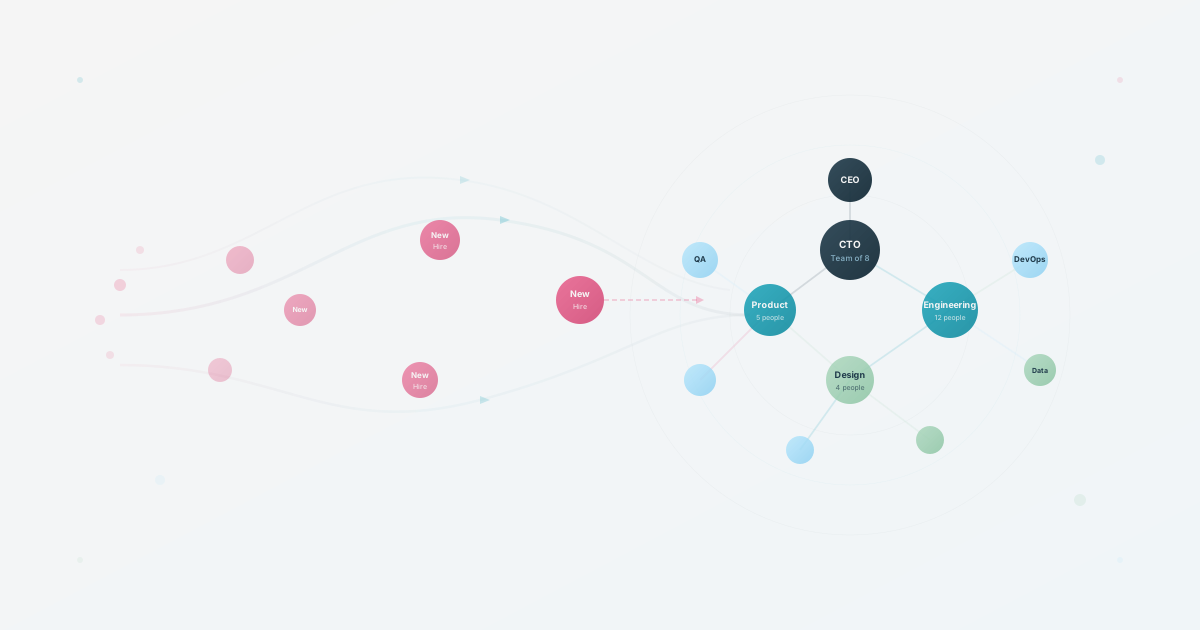
Remote work can maintain team bonds while reducing cross-team contact. You talk to your team every day, but you may never bump into someone from another department.
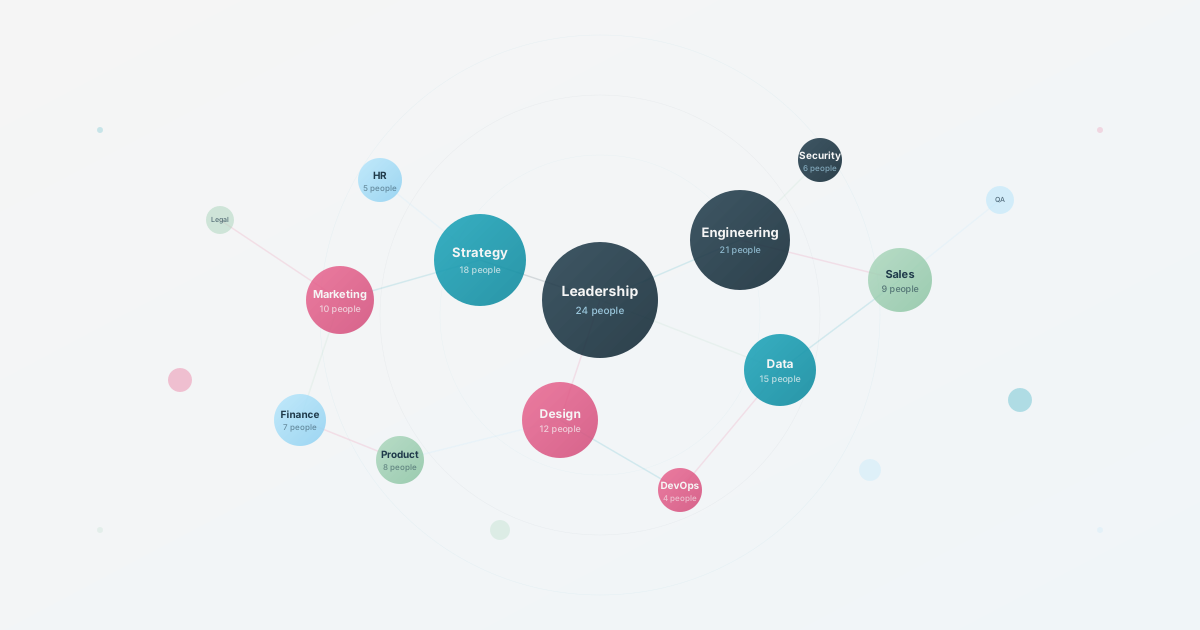
So one practical remote-culture experiment is cross-team connecting. Pair people from different departments only when the participants want it, surface shared interests across the whole company, and make it easy to browse who is in the organization and what they choose to share. If different audiences need different fields, document the view and access rules before sharing the directory. Without that visibility, remote workers may struggle to find each other, and the routing friction can accumulate.
What a Smaller Second Try Looks Like
A smaller second attempt can be easier to evaluate than a company-wide culture program. It is not guaranteed to work, but it creates a clearer test. Start with interests in employee profiles, then create one channel only when enough people have chosen the same activity. After a short pilot, ask whether anyone made a useful connection outside their team.
It might start with adding optional interests to employee profiles and making the directory worth browsing. No launch event is required. The change should make people a little more visible to each other while preserving the choice not to share.
The tooling is simple. The discipline is resisting the urge to over-manage it. Do not track who filled in a profile, add a “connection metrics” dashboard, or force random pairings with a Slack bot. Let people choose how to use the information, then measure only the outcomes they have agreed to share.
It takes longer than an event and is harder to put in a slide deck. That is why the pilot should measure actual conversations rather than attendance.
One Thing You Can Do This Week
Open your company directory. Pick a colleague you’ve worked with for over a year. Try to name one thing they care about outside of work.
If you cannot, that may indicate a discoverability gap worth testing with your team. Scheduled events alone may not address it. Start by making people findable and browsable in the tools they already use, then measure whether the change helps.
Use this today
Run a two-week cross-team connection pilot
Leave the exercise with evidence about whether people can form connections beyond their immediate team.
- 01
Choose three departments and invite volunteers to add one optional interest or conversation starter to their profile.
- 02
Seed one small group with people from different teams. Give it a specific reason to meet, such as a shared lunch, walk, or skill exchange.
- 03
Make the profiles and invitation easy to find, then ask participants who they contacted and whether the connection helped with work.
- 04
Review the results with the participants before creating more channels or making the field part of a formal program.
Pass / fail check
Keep the pilot when it creates real cross-team conversations. Do not judge it by channel membership or profile completion alone.
Questions readers ask most